

Learning to Listen to Yourself
Trusting your instincts in difficult environments.

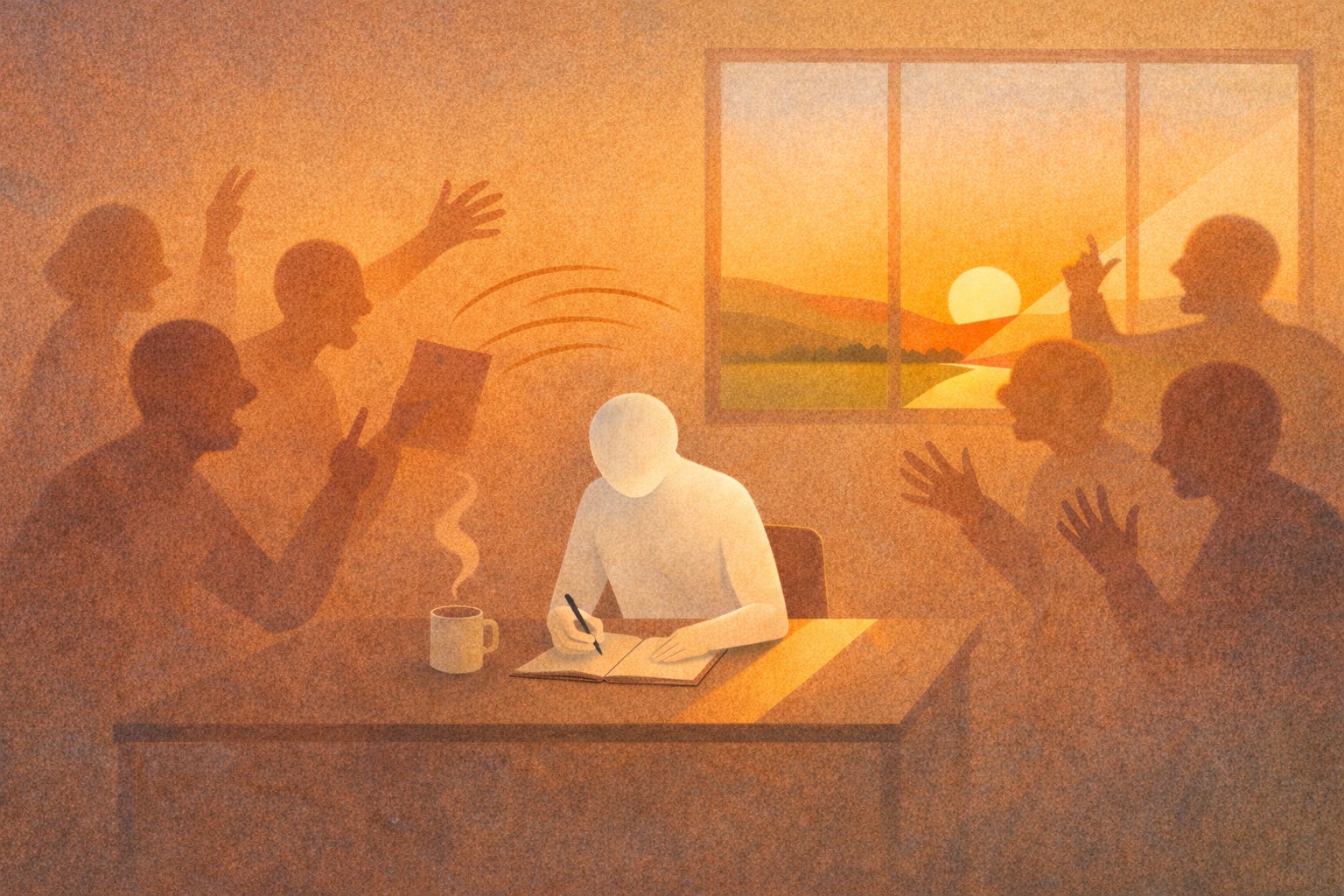
The Noise
As a senior leader, does anyone ever really tell you how to do your job better? Not often and not at most organizations.
That’s partly a function of seniority - the assumption is that you’ve already figured it out, that you’re operating at full capacity, that if you weren’t you wouldn’t be here. The developmental conversations that happened earlier in your career stop happening. It’s just expected that you should be producing excellent judgment more or less continuously, without much support.
This might be manageable if the work environment were straightforward. It isn’t. The people around you at this level are operating with their own priorities, their own pressures, their own calculations about what’s safe to say and to whom.
Your manager has an agenda. The people on your team have agendas. Colleagues are competitors in ways that aren’t always obvious. In an environment where promotions are scarce and exits happen fast, the idea that the people around you are neutral, loyal, and invested in your success is a nice one that most senior leaders have already stopped believing.
Getting Twisted Around
Even very good leaders lose the thread sometimes. The environment is confounding enough, and the information coming at you filtered enough, that you can find yourself genuinely uncertain about something you’re actually clear on. You know what you think. You know what you’ve observed. And somewhere in the process of testing it, qualifying it, running it past people with their own stakes in the answer, the original thinking gets muddled.
What’s needed in those moments is a way back to what you already know: your read of the culture, your sense of what the situation calls for, your instinct about the person across the table or the decision in front of you. The instinct was usually sound. Now you need to rediscover it through the noise.
The Thing You Don’t Want to Be True
The hardest version of this is when you already know what you think and you’re reluctant to trust it because the implications are inconvenient. The team member you’ve been defending isn’t working out and you’ve known it for months. The direction you’ve been given doesn’t make sense and the person giving it won’t hear that. The role has stopped fitting and admitting it would mean disrupting a life you’ve worked hard to build.
In each of those situations, the instinct arrives early but what follows is a long process of talking yourself out of it: gathering more data, seeking more opinions, waiting for more certainty. Some of that is reasonable due diligence. But a lot of it is avoidance dressed up as rigor, and at some level you know the difference.
Getting Back
What it takes to return to your own judgment is a willingness to stop treating your instincts as the thing that needs to be proven rather than the thing that’s already telling you something. The read you had early in the process, before the consultations and second-guessing, was usually closer to accurate than the one you landed on after running it through everyone else’s thinking.
The leaders who develop this as a practice are equally rigorous. The difference is one of sequence. They start with what they sense and then pressure-test from there. The instinct becomes the hypothesis rather than the conclusion that needs defending. That’s a subtle shift in how you engage with your own thinking, and it changes the options you can see.
Most leaders who do this work discover they weren't as lost as they felt. They'd just been asking everyone else before they asked themselves.